We’ve been having fun exploring sous vide cooking. For anyone not familiar with this technique, it’s simply a method of cooking in a water bath at a precisely controlled temperature – which is the final “done” temperature until the food is heated through and to a time set to achieve the desired results: i.e. Doneness (Rare/medium rare/well-done) and/or tenderness.
Sous vide (pronounce “soo veed”) is French for “under vacuum.” It’s a cooking method that has been around for quite some time but generally limited to commercial kitchens and caterers. As the technology has gotten less expensive it has become a popular method (among us so-called foodies anyway ) for cooking at home. This is a cousin to methods such as bain marie and the 1970’s sensation boil-in-bag products.
Here’s an article in The New York Time from 2000, when sous vide was just starting out in high-end restaurants in America: http://www.nytimes.com/2000/02/16/style/what-to-call-it-when-chefs-boil-in-bags-cuisine.html. A lot has changed since then.
The principle feature of sous vide isn’t so much the vacuum part, it can certainly be employed but in many cases, not required. What is required is the ability to maintain a precisely controlled cooking temperature for a specified period of time.
Generally speaking, the temperature will determine the “doneness” and the time will affect tenderness. The combination of the two work together to create safety (pasteurization). Cooking is accomplished by sealing the food in a bag (vacuum sealed or not) and placing it in pre-heated water. The water is heated by a circulation heater to precise temperatures. Since you are targeting the temperature that you want the final product to be when done, there is no way to overcook by applying too much heat.
In conventional cooking in a an oven, pan, or grill, you are applying temperatures to the food that are much higher than needed to actual cook the food. The result is often that the food is over-cooked and dried out on the exterior before the interior is even close to being done. Interestingly, we are accustomed to having that dried out, crusty exterior, which by itself is not accomplished by sous vide cooking. Another step is sometimes needed to bring the product up to the ‘mouthfeel’ we associate with good eating.
To Sear or not to Sear. That is the Question
This brings us to that delicious, charred, exterior that you get on the grill or in the oven. Yes, you can have that too. Some recipes call for searing before sous vide, in general we prefer to sear after sous vide. Simply heat your oven to super-hot, use a smokin’ hot pan, or flaming grill to quickly sear. The key here is quickly so that you don’t continue to cook the inside.
This post-searing technique is especially good for fish like skin-on salmon and hamburgers. Veg, asparagus as one example, benefit from the post-sear as well. The only potential down-side of the post-sear has to do with what happens to the protein’s flat exterior (like a steaks exterior) as it sits in the water bath. During sous vide, the protein’s surface subtly warps and effects the final sear. To combat this, just press down gently on the protein as you sear…don’t squish it, just press! You should have good results by combining the post-sear and press. Some meats such as lamb, have fats which change flavor (for the worse) when oxidized; pre-searing encourages oxidation creating that distinctive “mutton” flavor.
Pre-searing is sometimes useful. For instance, giving a quick-cooking pork tenderloin a nice pre-sear, gives you that nice exterior and along with it, subtly infuses the sous vide with a deeper flavor. We’ve done it both ways and find it’s really just up to your preference.
Bottom line: searing after sous vide gives you that nice look and taste we associate with great eating while heating up the exterior right before it comes to the plate. The cripyness of a pre-sear will be dissolved during the sous vide cooking.
The Issue of Temperature
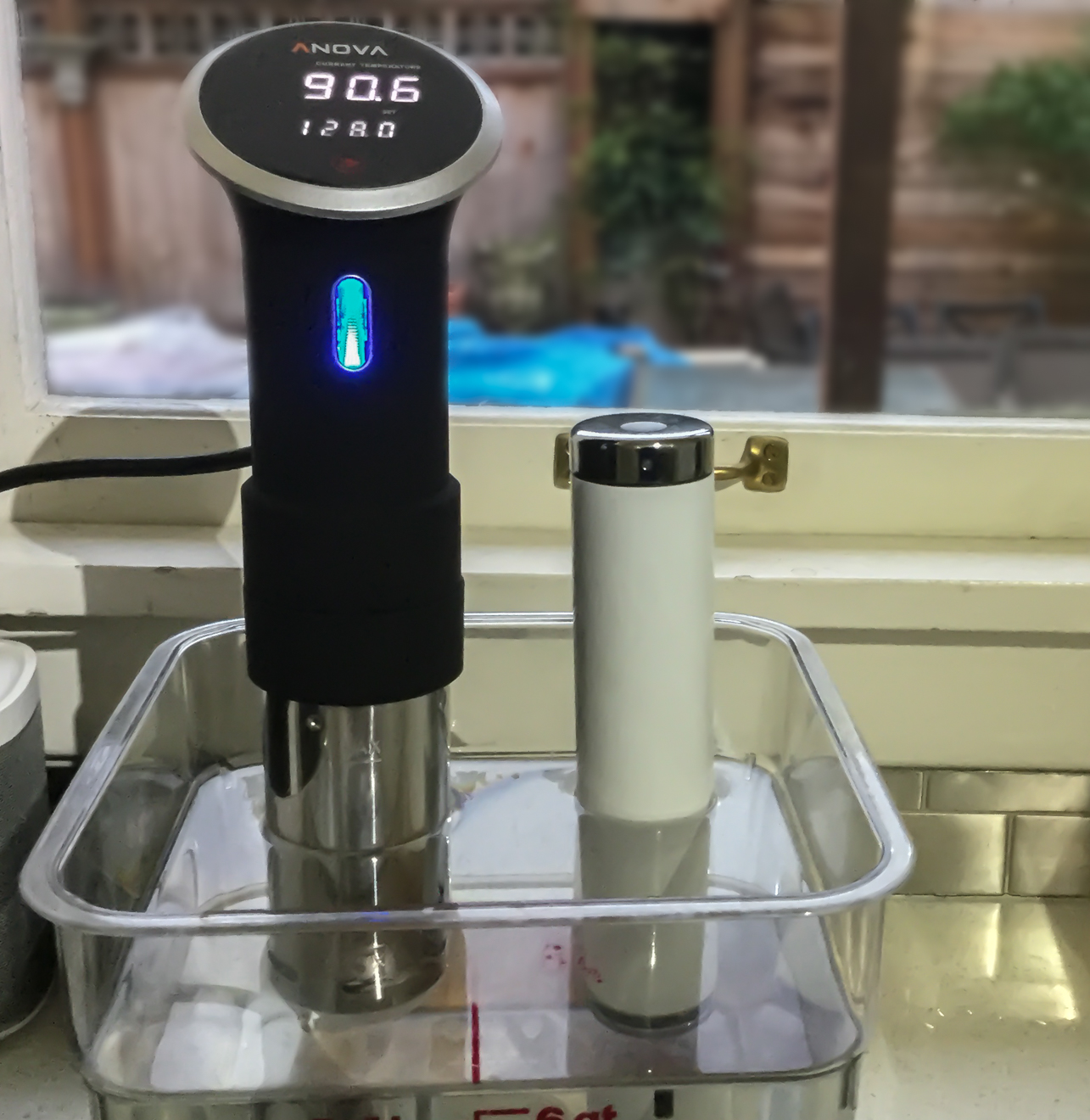
How do you control the temperature? There are a number of circulating heaters on the market these days. The features vary as much do the prices. Our favorite sous vide device is the Joule made by Chef Steps; it’s small, simple to set up and use, elegant and comes with a great phone/tablet app. We also have an Anova as a backup.
A great feature of the Joule is that you can control it with your phone or tablet app. The Anova can as well (ours is Bluetooth, not wifi, so can only be controlled in proximity and by only one phone) but has the ability to adjust time and temp on the device itself, the Joule can only be controlled through the app. The Joule also has a magnet on the bottom so that it can hold itself in place in a pot without using its clip. The Anova, being much larger, has a bulky clamp to hold it in place. What they have in common is that they both precisely heat the water by circulating the water through a heating element.
There are, of course, many other brands and models. You’ll mostly hear us talk about these two as they are what we know and have and we’ll do full reviews of each in coming posts.
Below are the posts we’ve written that talk about or when/how we’ve used sous vide in our cooking.