

Panama Canal Transit
Here we are, nine days into our 14-day cruise, having only stopped in one port: Puerto Quetzal, Guatemala (more on that later). On this day, in the early morning, we arrived at the Pacific entrance to the Panama Canal, near Panama City.
We sailed past dozens of other ships waiting their turn to go through the locks. Apparently, you can pay a substantial fee for a reservation, or you sit and wait for an opening. Many ships, I guess, have done the math on the cost of waiting versus the cost of the reservation and decide to wait it out. We just scooted right through to the front of the line.
We passed under the Bridge of the Americas at about 6:30 AM, just as Captain Thorhaug said we would. It’s an impressive bridge, but apparently, not high enough! Word has it that it’s slated for replacement with an even taller bridge. We have an entirely different post about all that here: https://foodfriendstravel.com/bridge-of-the-americas
There were a few prime viewing zones for the day. I headed for up-high, on Deck 14 at the front of the ship. I got there as early as the late riser I am could manage. Of course, plenty of others had already staked out their spots. I wedged myself in as best I could. The fore-deck on deck 5 was also opened to passengers. This area is usually only for crew, where they have their own hot tub and sunbathing space. As opposed to Deck 14 with its bird’s eye view, this was more on the level of the locks themselves.
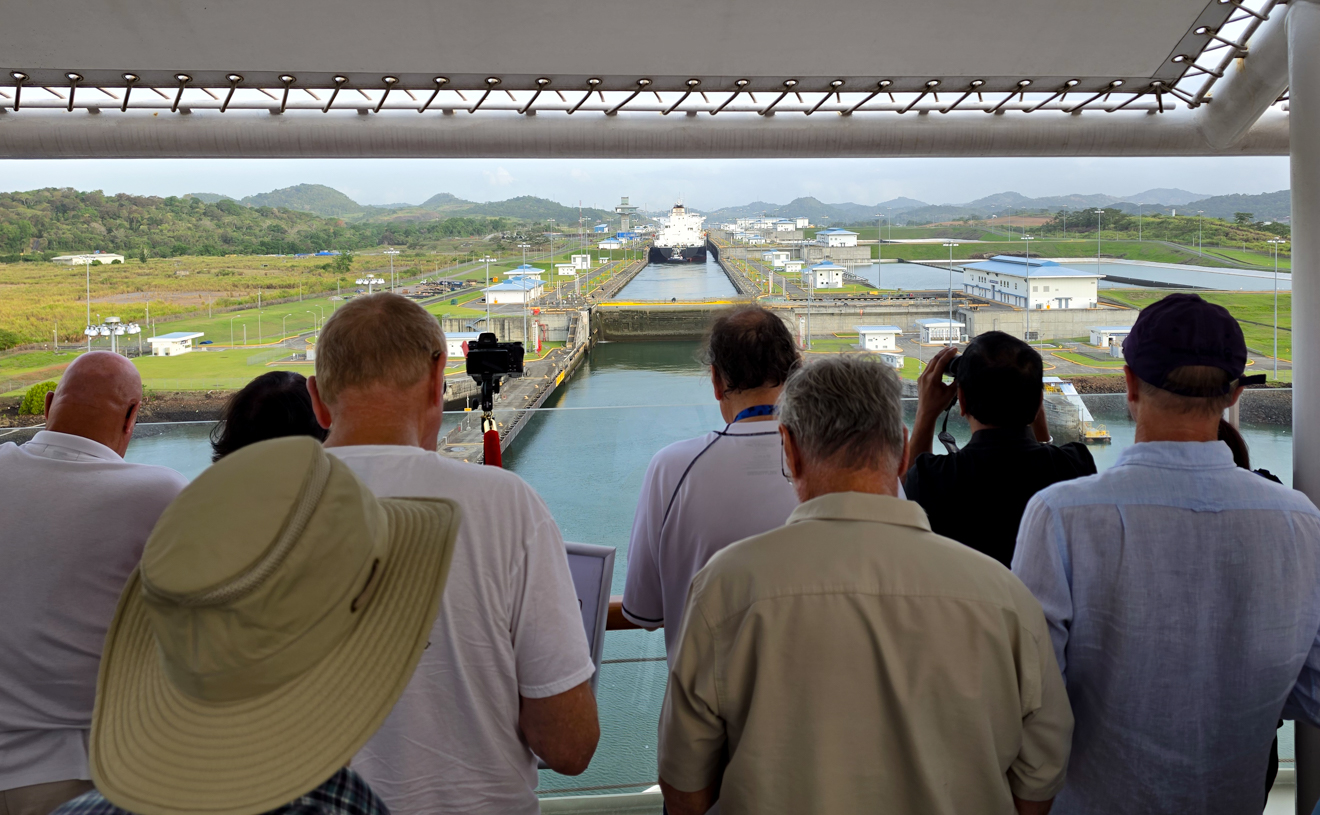
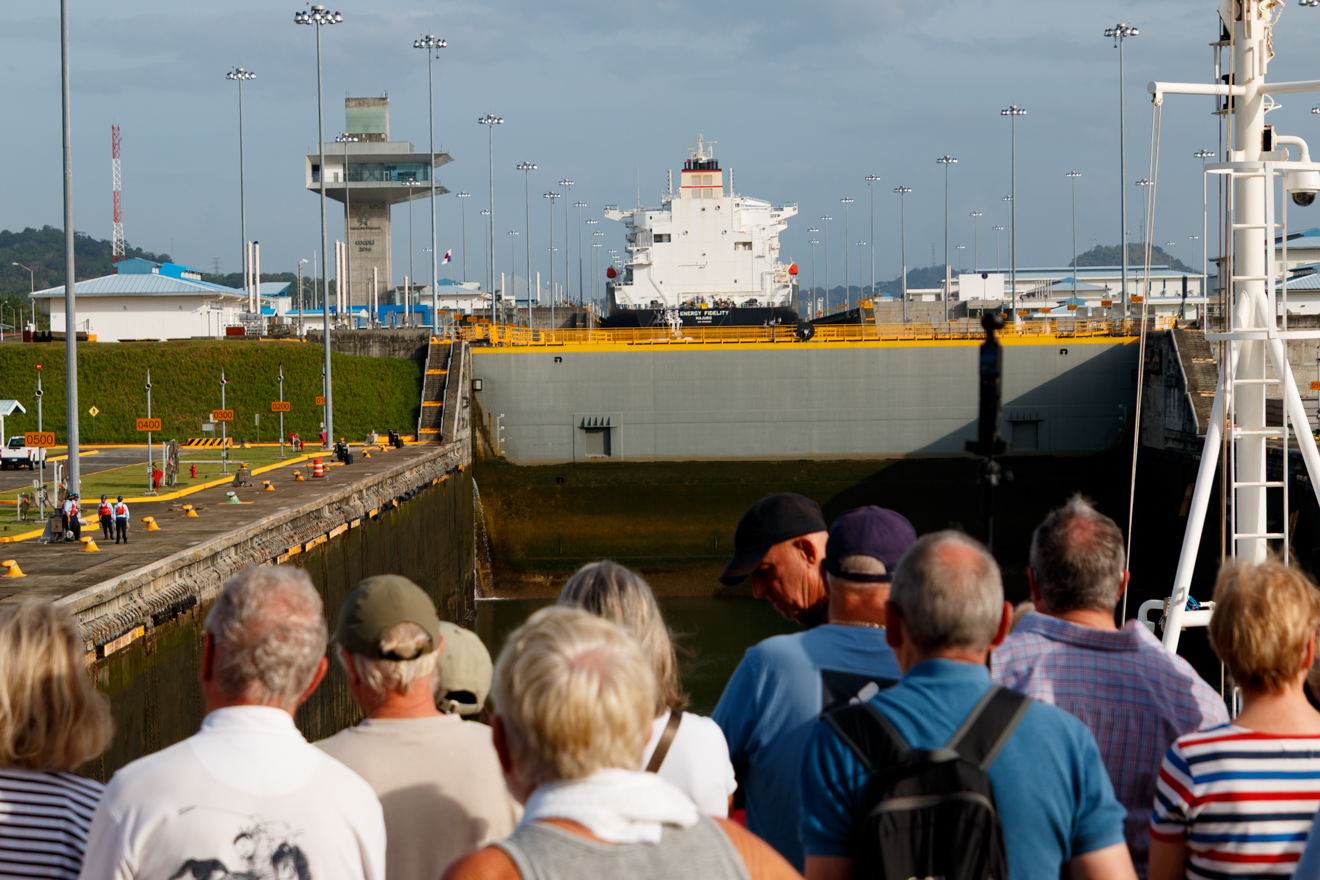
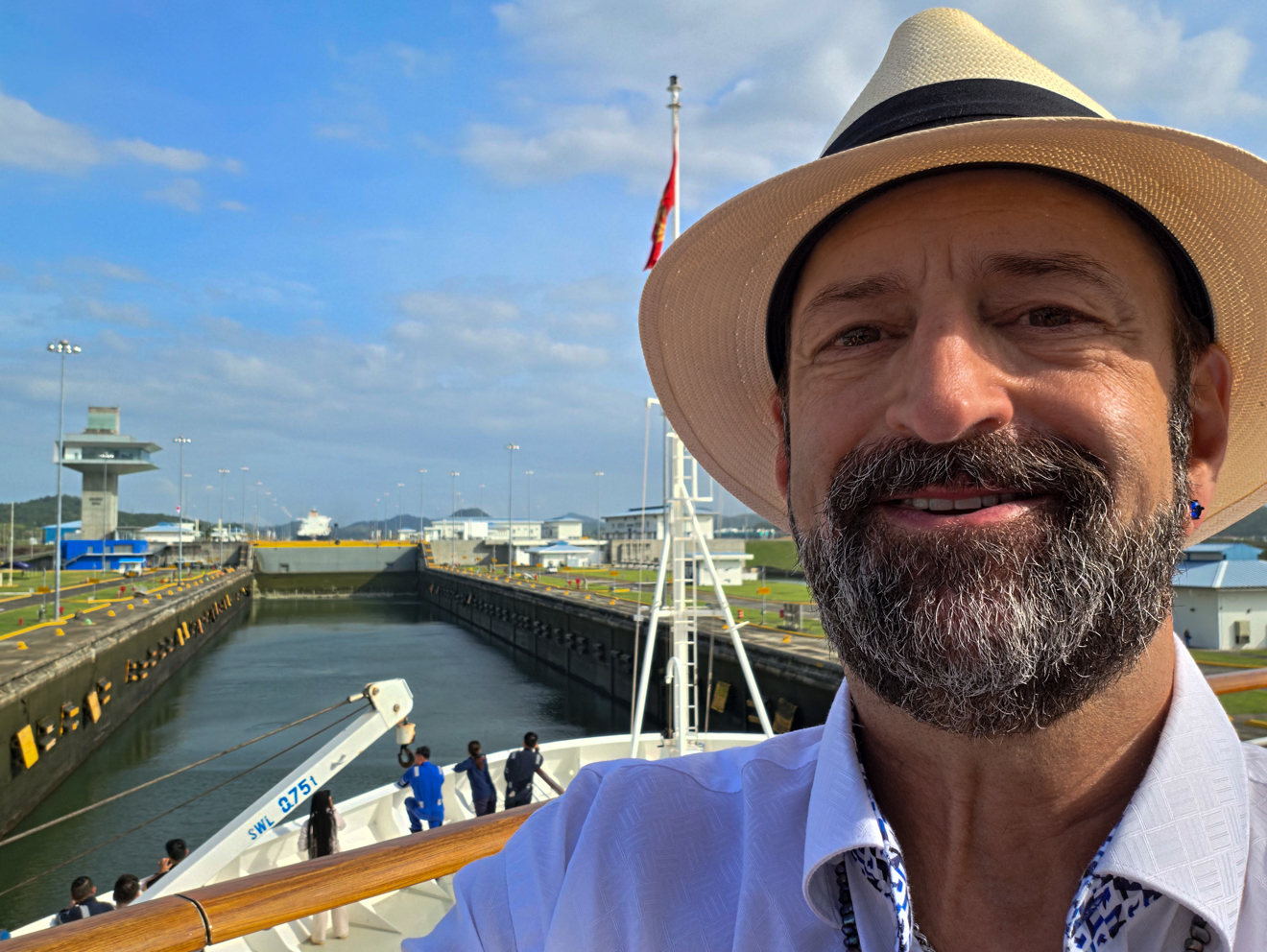
As you watch the process, it seems like it’s very slow, and I guess, in a way it deliberately is. But checking the clock, it really doesn’t take that long to get raise a 113,000 ton ship through three lock chambers, for a total of 85ft (+/- depending on tide). It’s surprising how few canal crew along side the locks it actually took to manage this huge ship. I’m sure there were plenty of others in control rooms, not to mention the crews on the two tugs that were with us for the entire crossing. There were no lines to pull us along, it was all up to these tugs to keep us centered in the locks!
A bit about being centered in the lock, or more particularly, the width of the locks. As you likely know, there are now two sets of locks at each end of the canal. The older locks (“panamax”), are narrower, at 110 feet (33.5 meters), while the new (“neopanamax”) locks are 180 ft (55 meters) wide. Cunard’s Queen Elizabeth has been through the panamax locks several times (first in 2011); it only had inches to spare. We heard passengers on one of these transits say they could practically touch the walls of the canal from their balcony! The Queen Anne is almost 11 ft (~3.3 meters) wider, so must use the neopanamax locks, and with about 63ft (~19.25 meters) to spare side-to-side. Queen Anne’s maiden transit was in 2025 as a southbound (Atlantic to Pacific) journey. We were on the inaugural northbound (Pacific to Atlantic) transit.
Speaking of northbound vs southbound, that’s one thing that really surprised me about the canal that I never realized, even being a bit of a map-buff. The canal doesn’t run in an east-west orientation. It’s more north-south. In fact, from the Pacific, the entry is actually east of the Atlantic side!
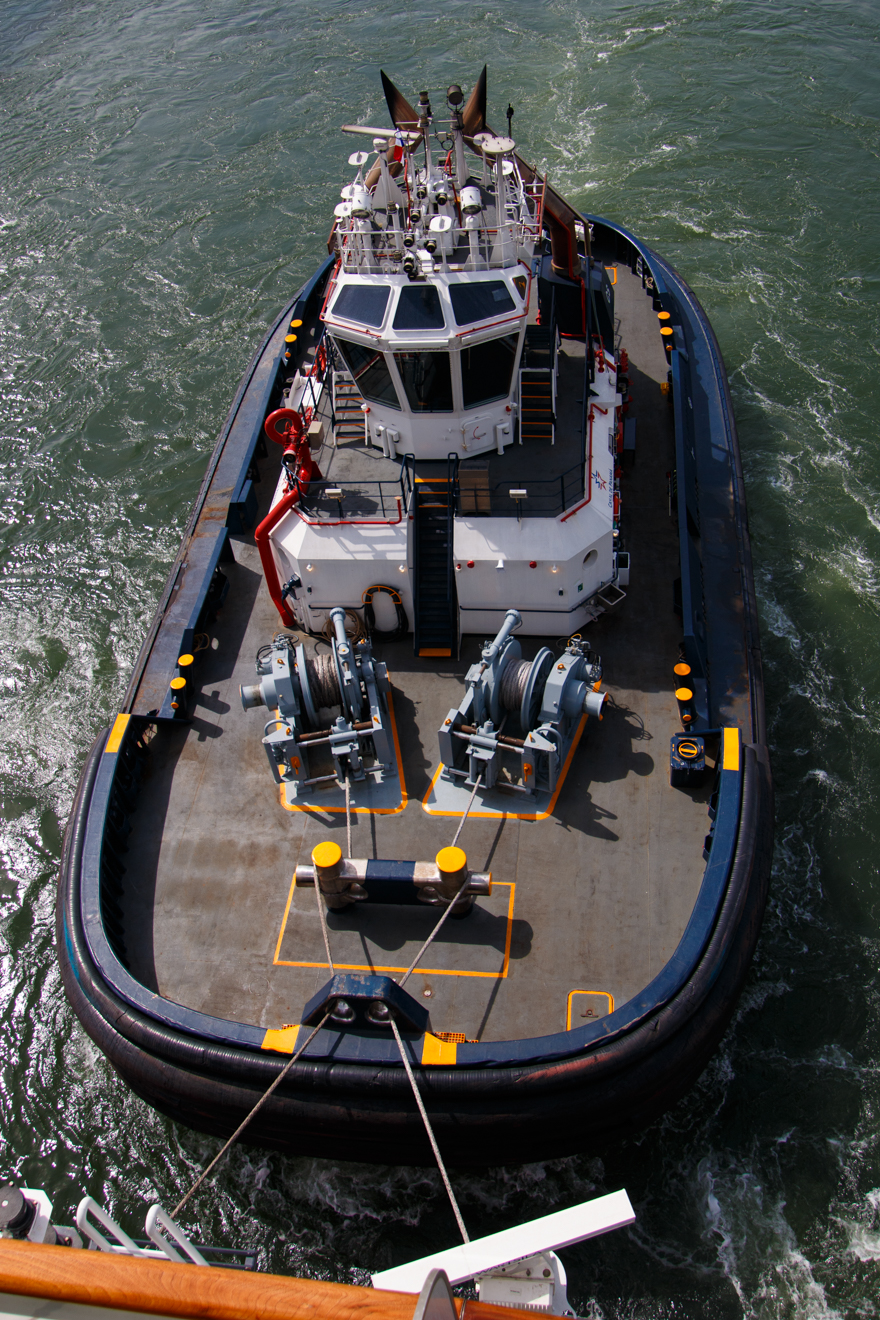
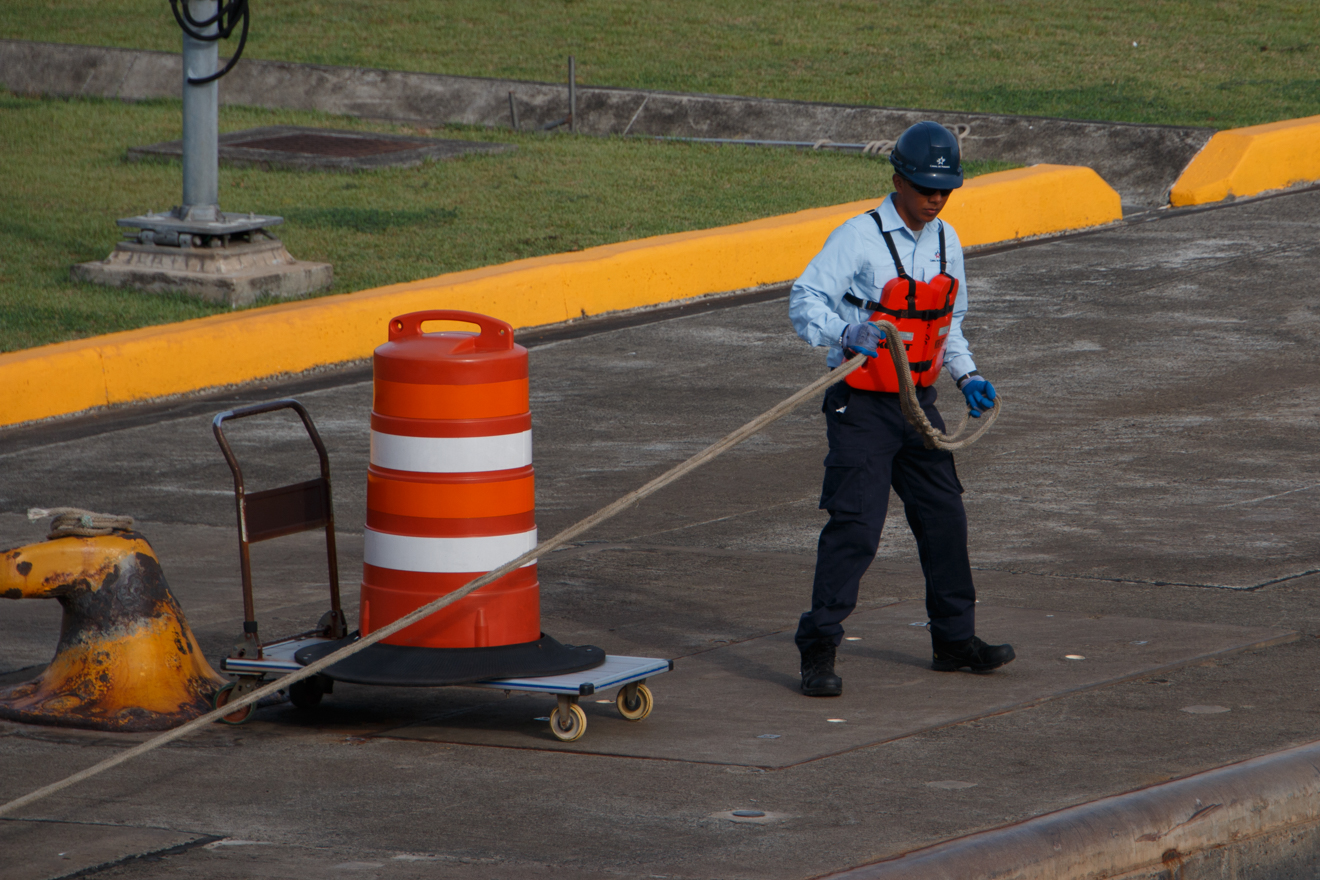
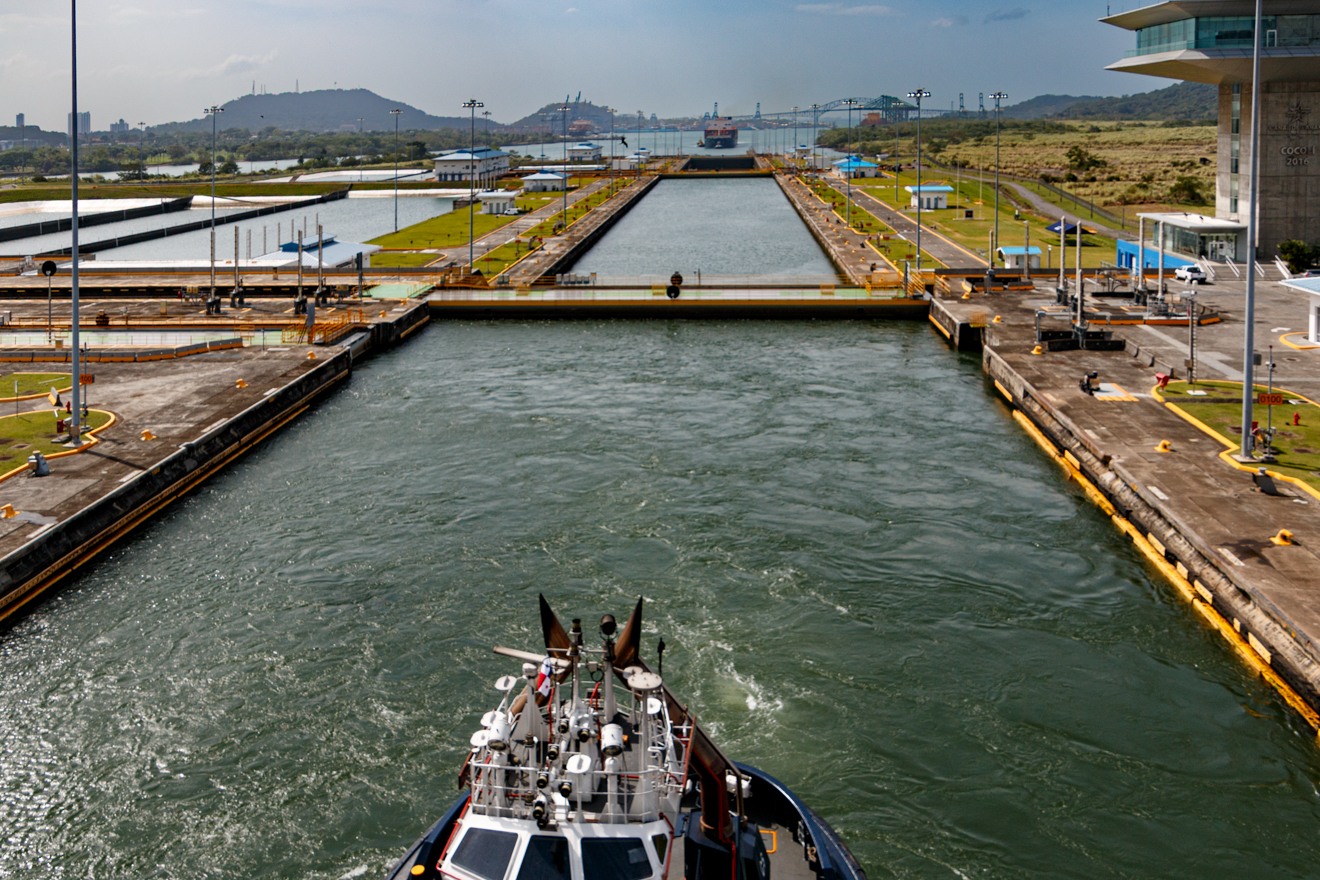
Once through the Pacific locks, the rest of the day was a leisurely float along the lakes and canal through the jungle. You would expect to see towns and villages along the way, but no. Not a one. But I also can’t imagine how hard it would be to put roads through this thick jungle. There is a railway all the way along, however. Us, on the other hand, had an elegant place for lunch.
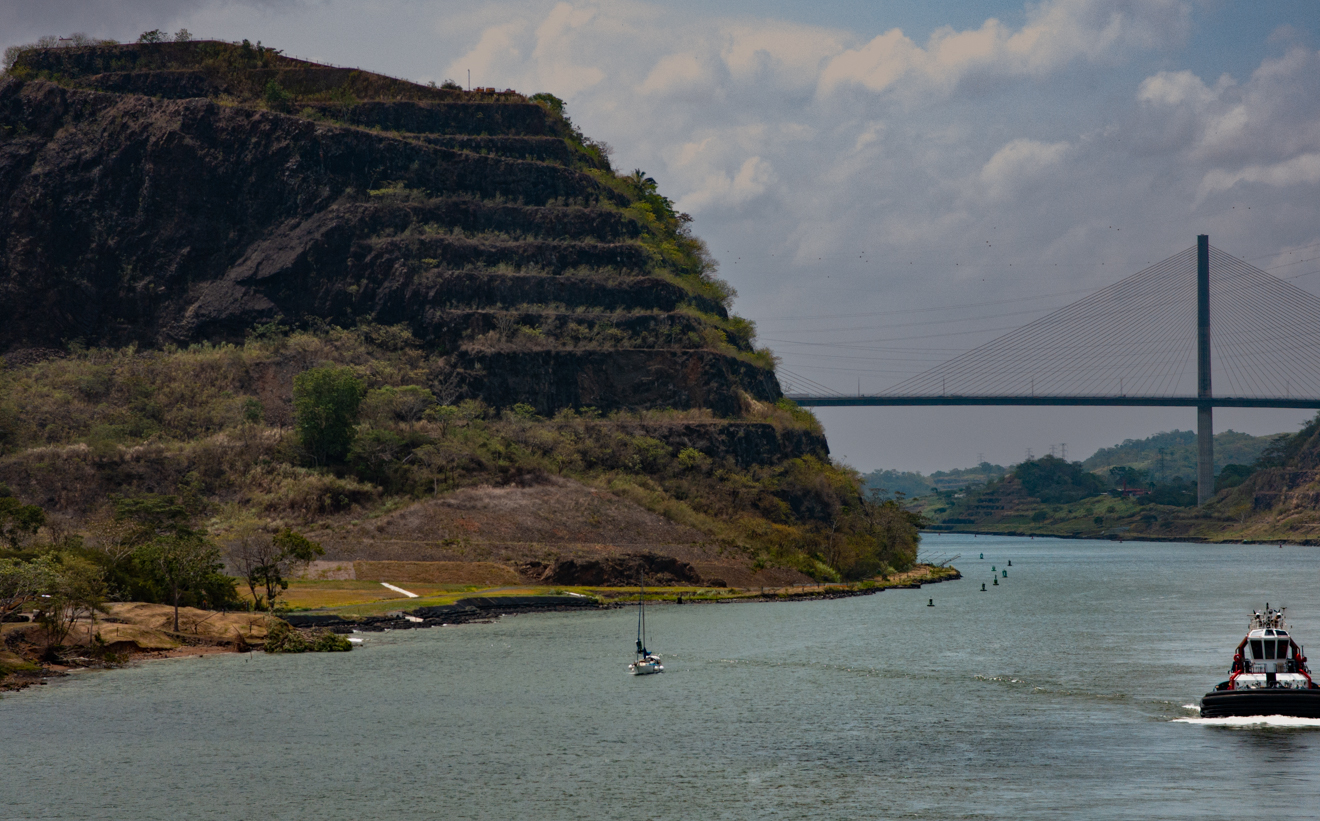
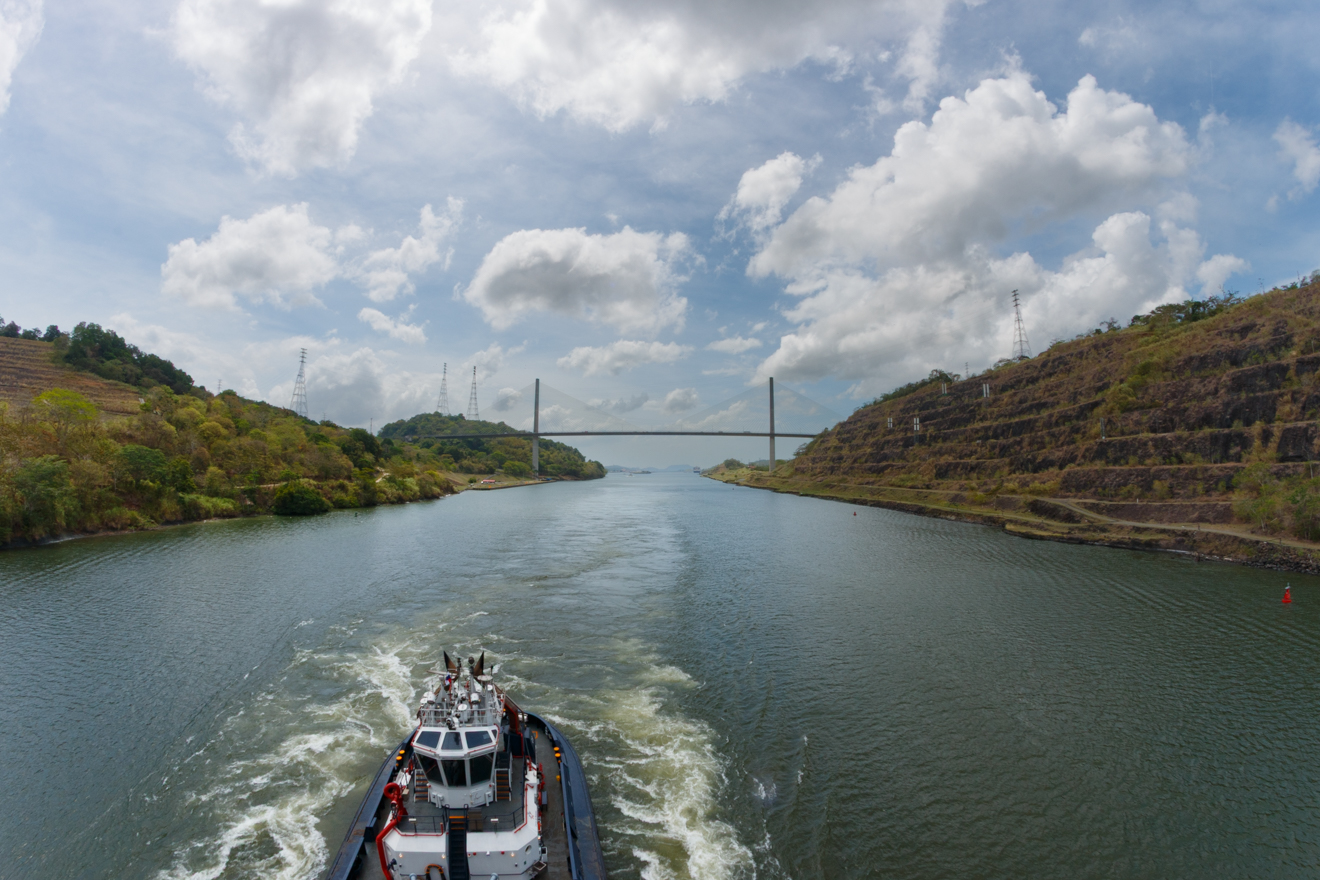
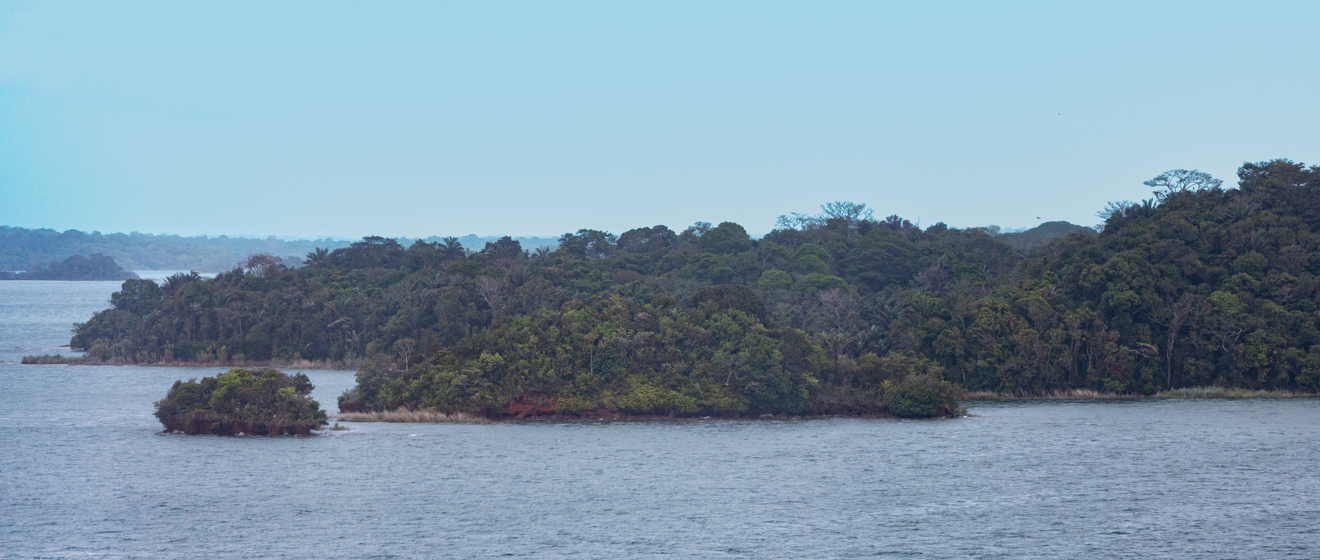
By mid-afternoon, we had reached Gatun Lake on the north end of the canal where we had to wait a few hours before entering the Agua Clara Locks. This gave us some time to relax on deck in the sun with no new canal excitement to take in. And have some afternoon tea – as one does.
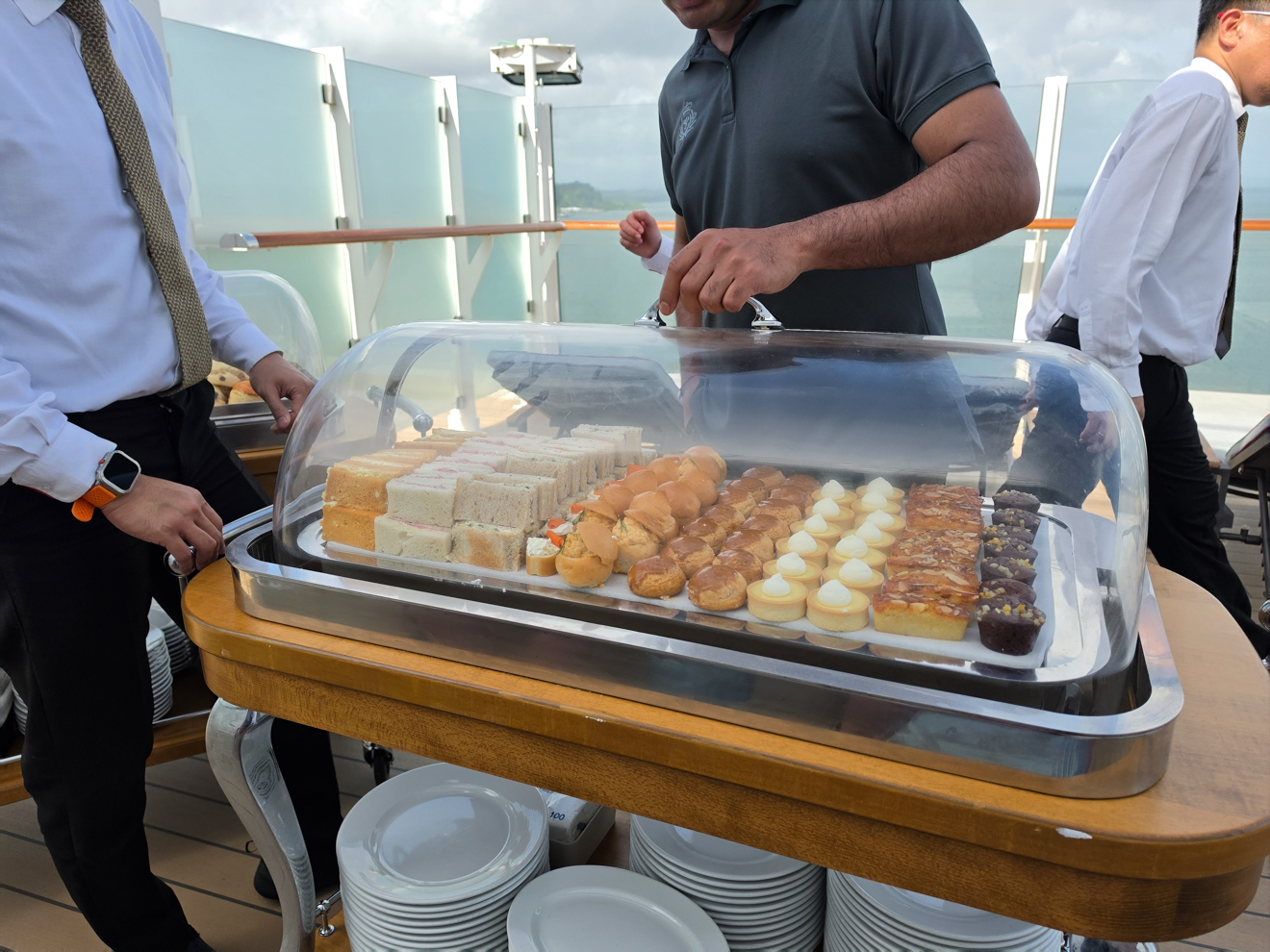
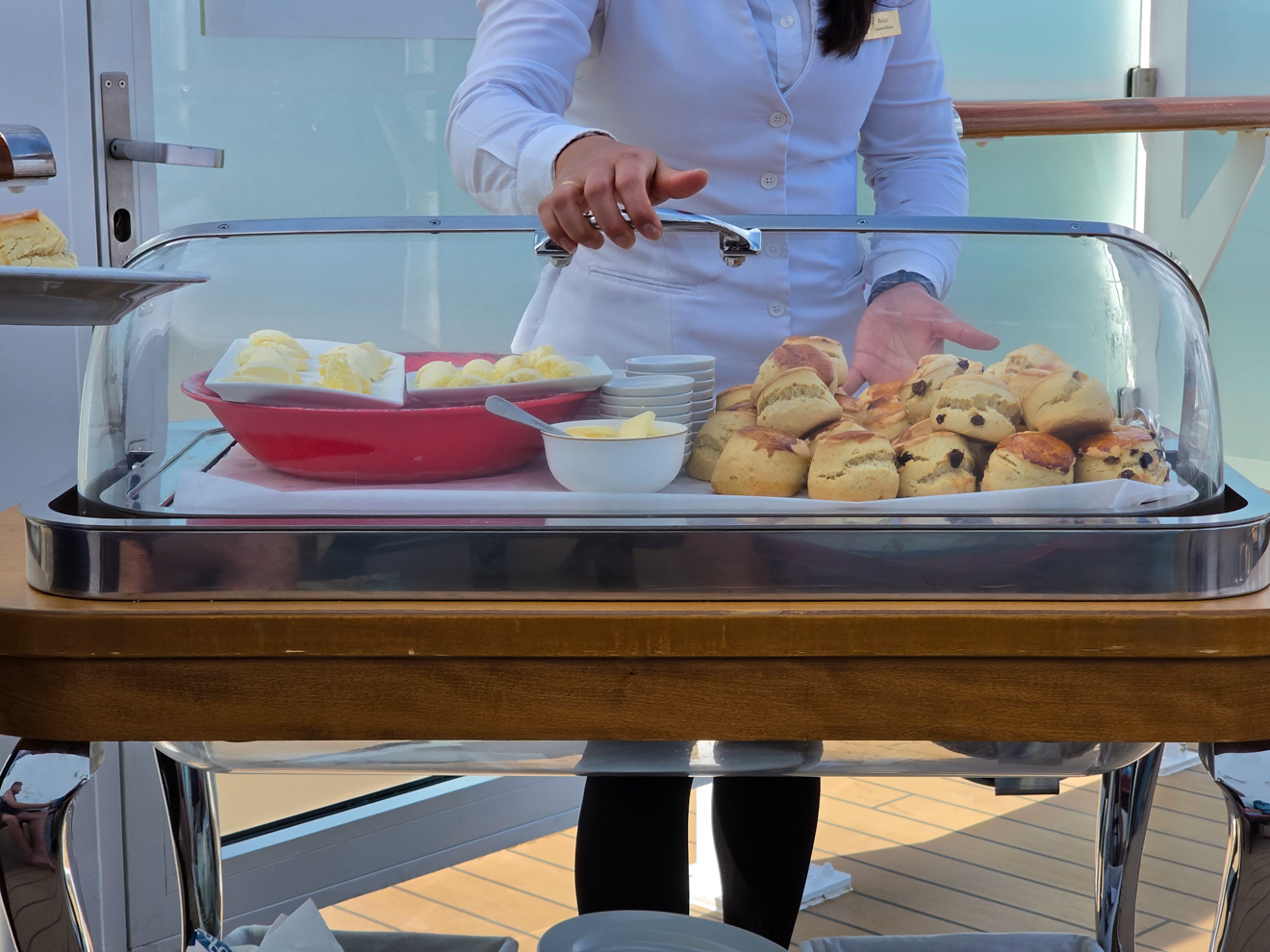
After about two hours, it was our turn to enter the locks. We got lined up and proceeded through.
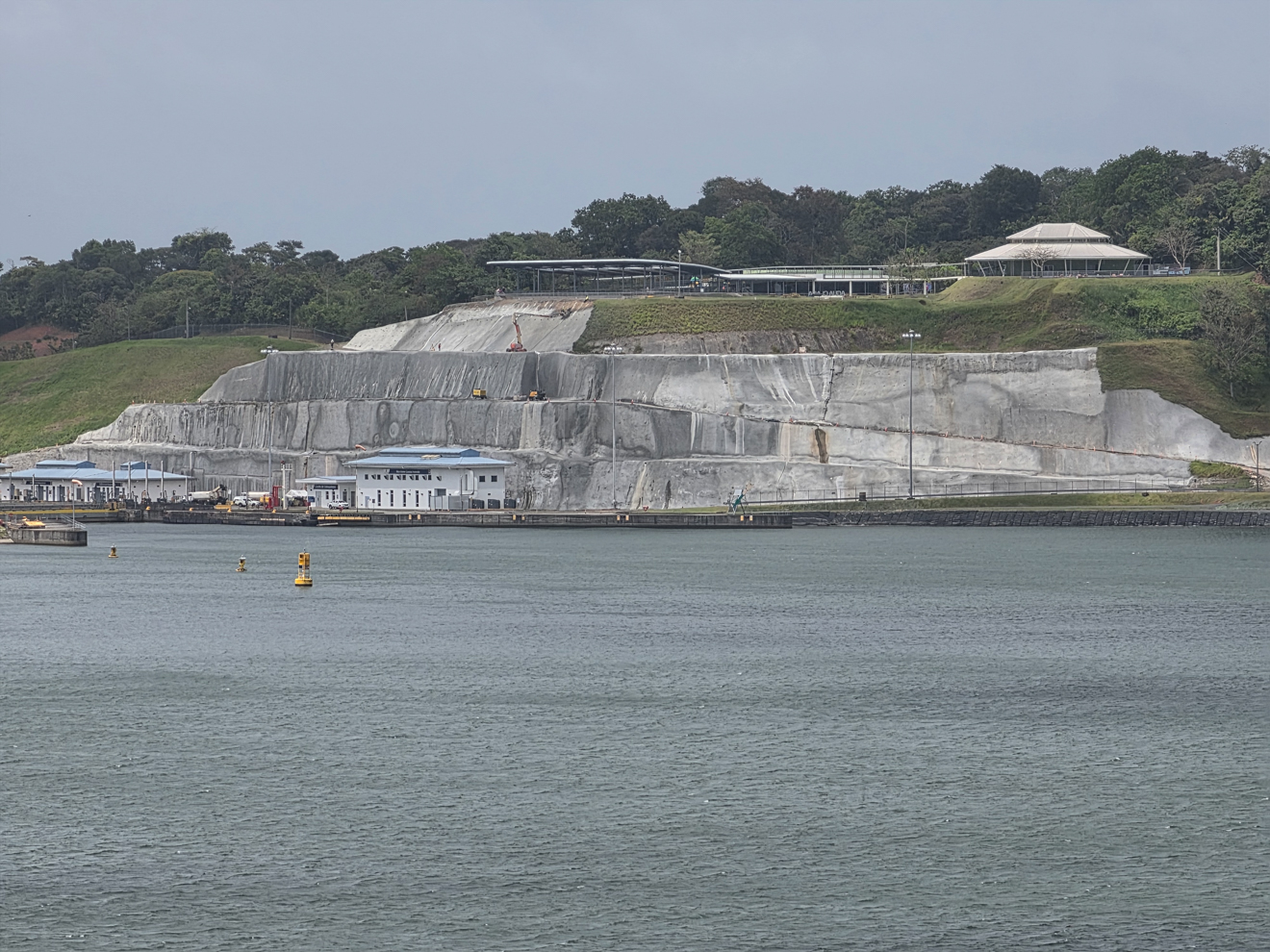
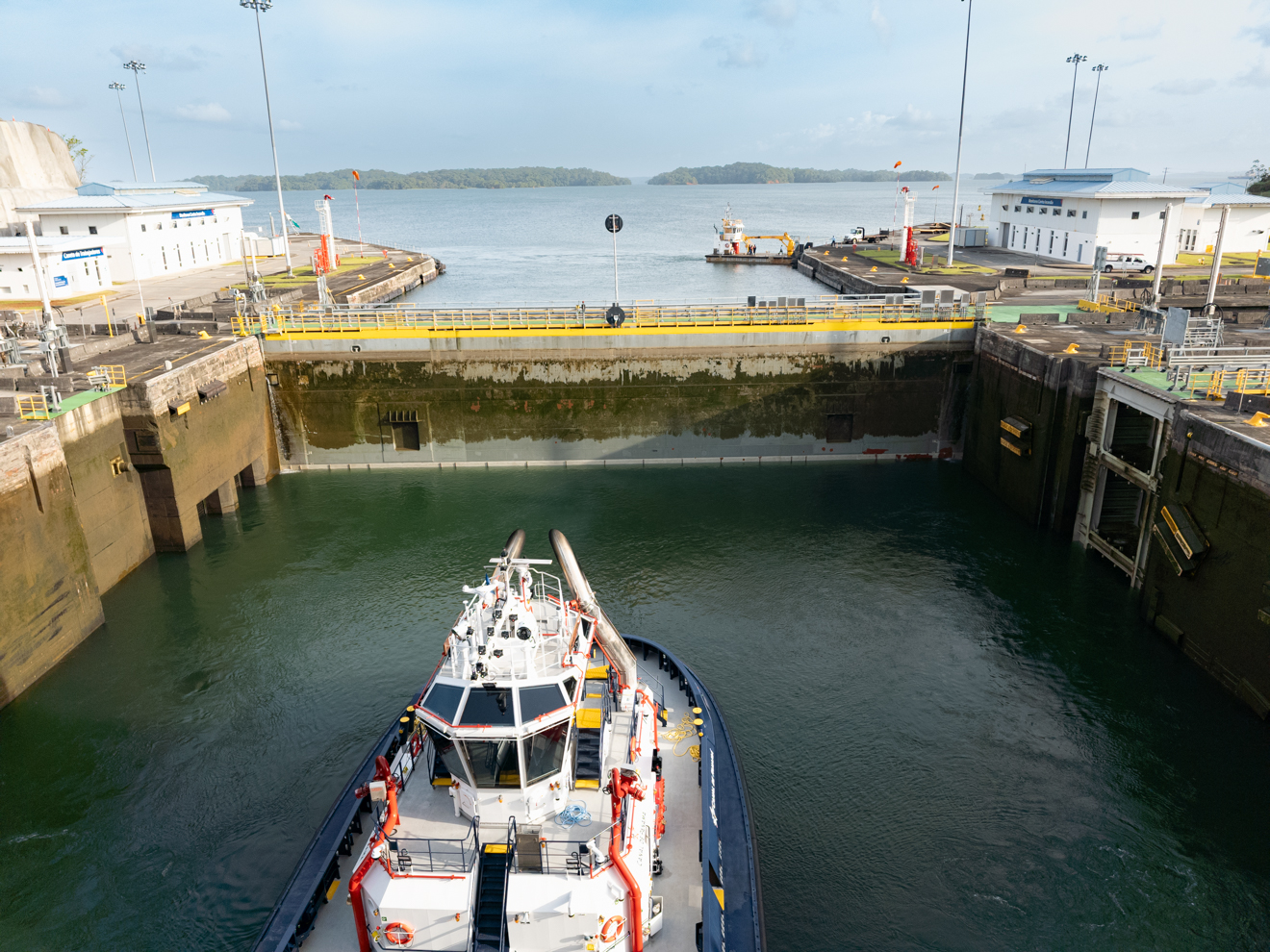
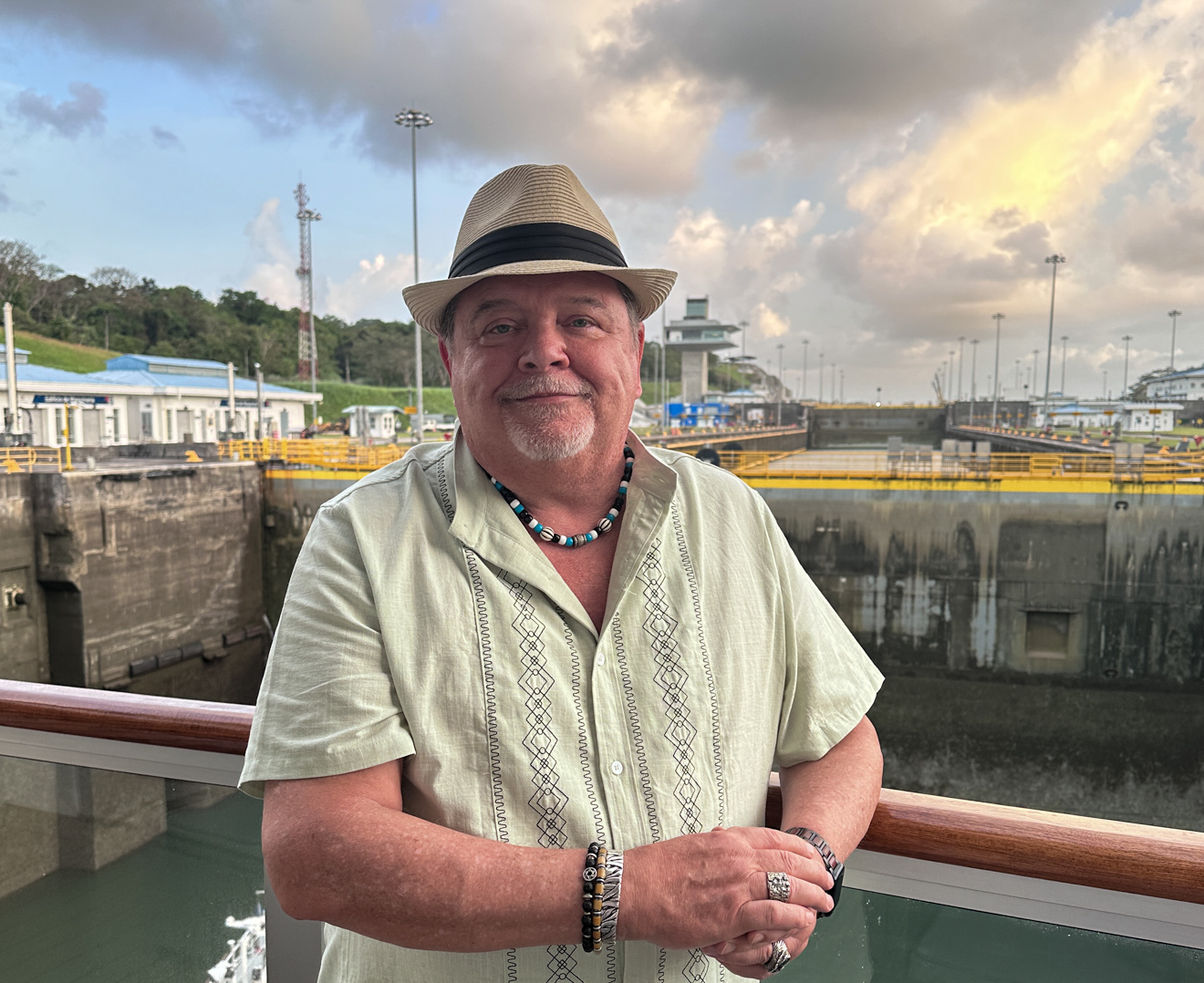
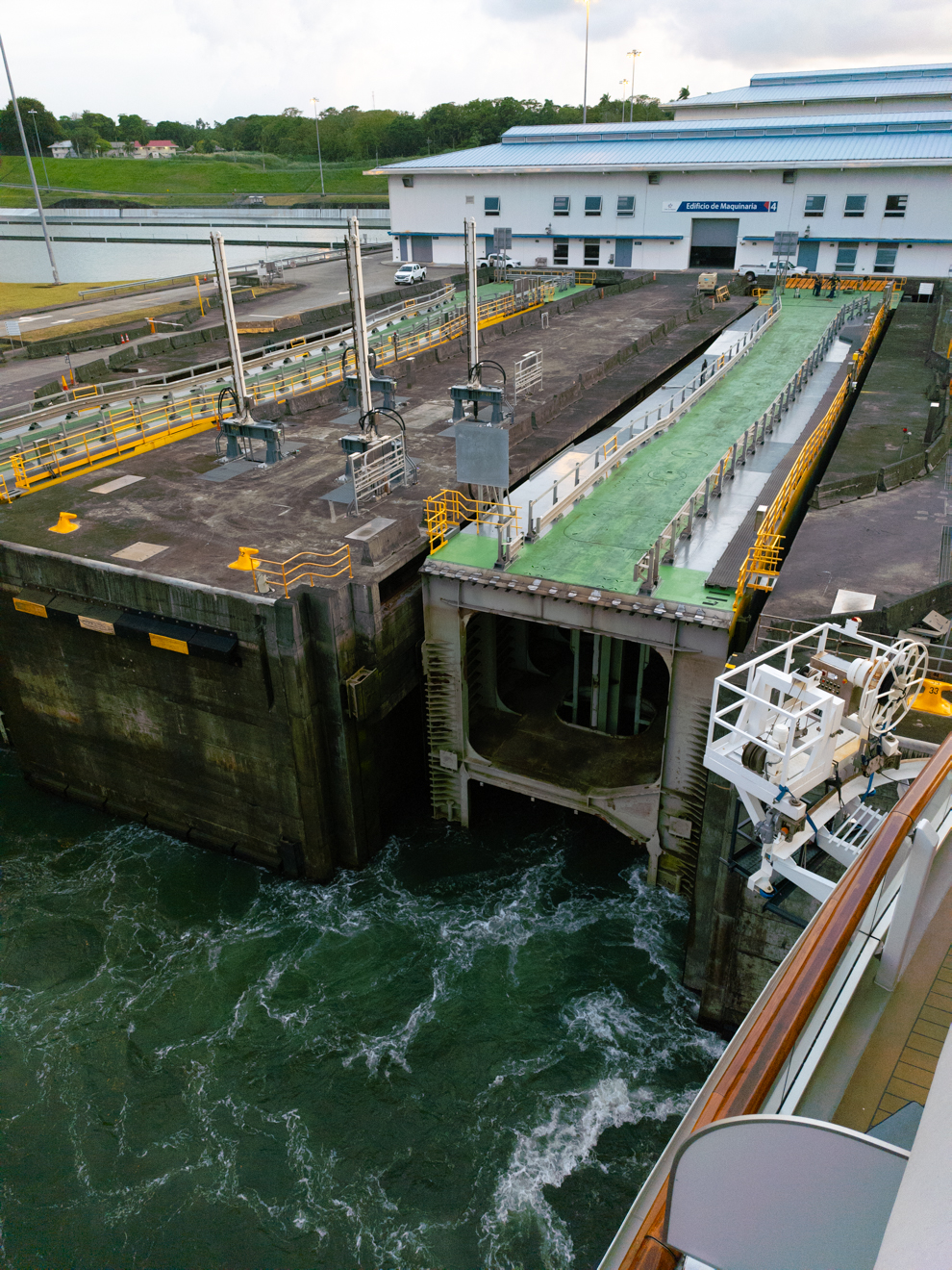
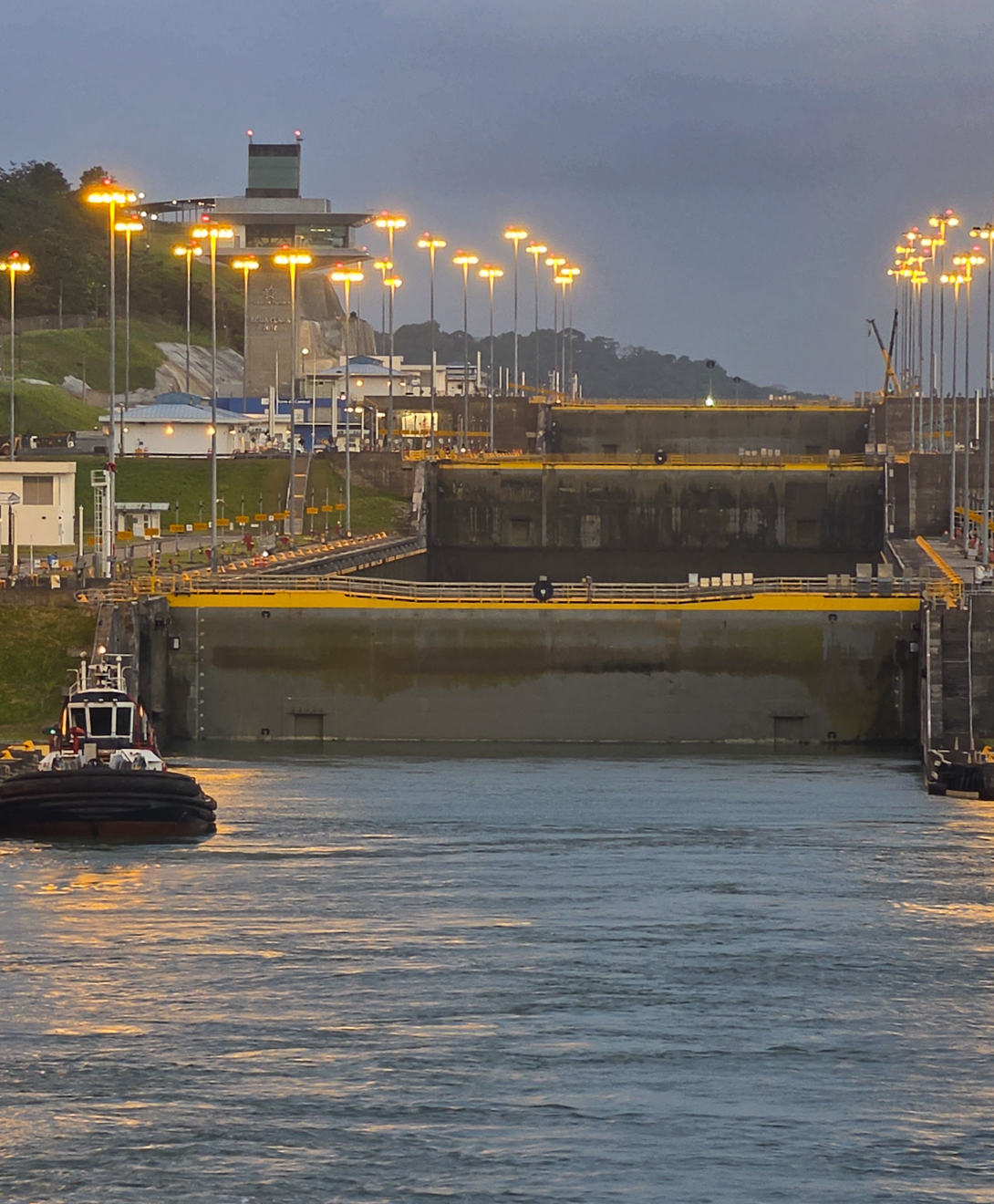
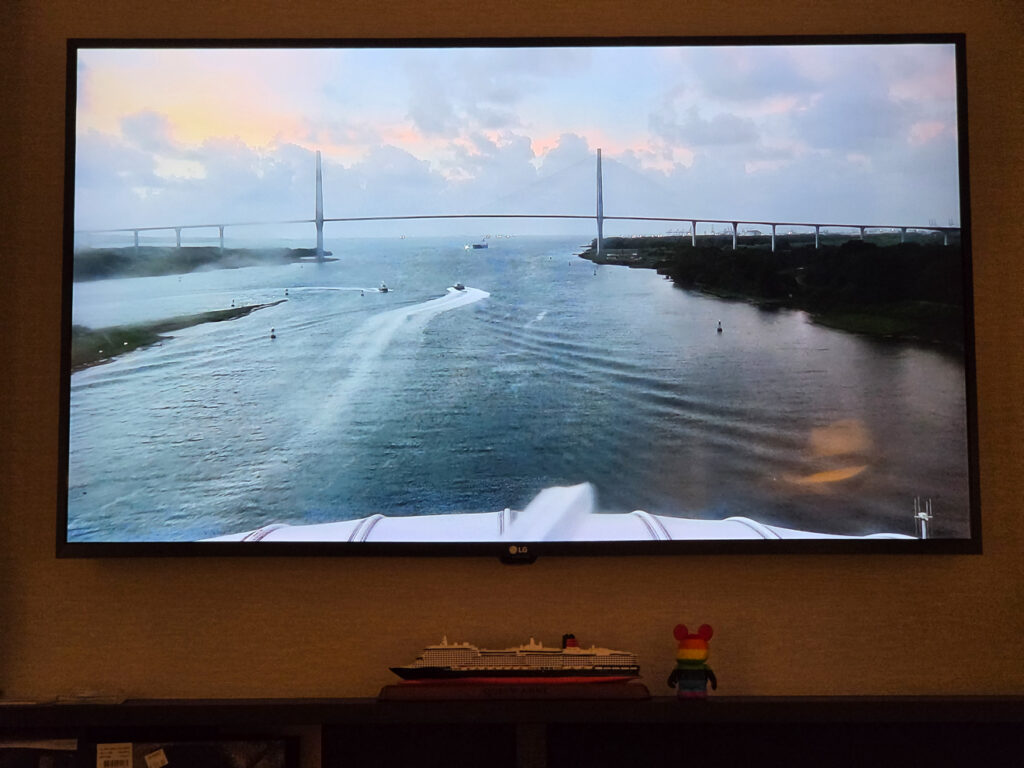
Roughly 12 hours after passing under the Bridge of the Americas, we were through the canal as we passed under our third bridge, Atlantic Bridge and entered the Caribbean Sea.
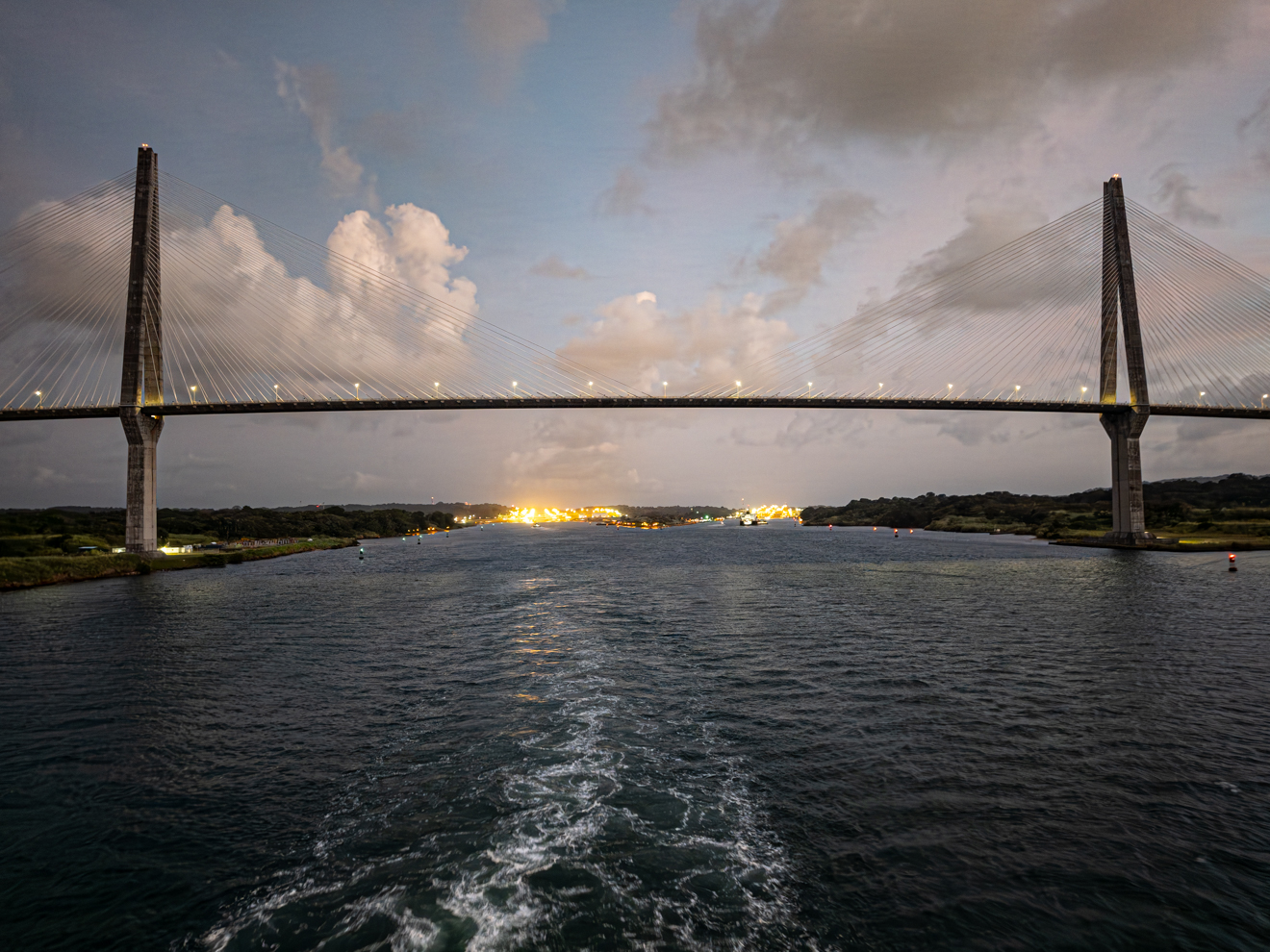
What a long day! But still thrilling to actually see this amazing piece of architecture and engineering. We hope these few photos capture the experience. This was likely a once-in-a-lifetime journey for us, but glad we could share it with you.
BTW…When I asked Captain Inger during our behind-the-scenes tour, she said it cost about $390,000 for the Queen Anne to pass through the canal. That’s about $130 per passenger, assuming full occupancy, out of everyone’s fare going to the canal authority for operations.